Showing posts with label How to Understand Abstract Art. Show all posts

Sunday, December 23, 2018

Buying Paintings: Expressionism

[caption id="attachment_14042" align="alignnone" width="300"] HTB1G2lTdeSSBuNjy0Flq6zBpVXarjpg120x120[/caption][caption id="attachment_14061"  ]

 Buying Paintings: Expressionism

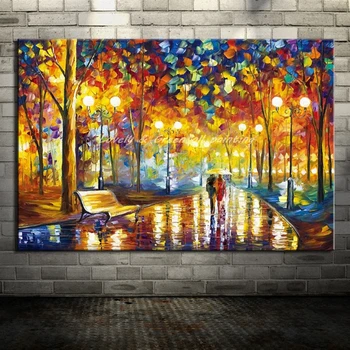
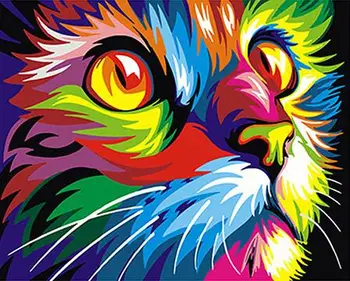
When speaking on buying paintings of the Expressionist movement, it is always a good idea to review what elements make Expressionism unique, and to gain an understanding of some of the artists representative of this particular artistic movement. The agreed upon intention of Expressionist artwork is not reproduce a subject accurately, but to instead portray the inner state of the artist, with a tendency to distort reality for an emotional effect. The movement is closely associated with its’ beginnings in Germany, and has a few different but overlapping schools of thought within. The term Expressionism was first used to describe the movement in the magazine produced in 1911 called “Der Sturm”, and was usually linked to paintings and graphic work that challenged academic traditions at the time. The philosopher Friedrich Nietzsche later helped to define the area of modern expressionism better by clarifying the movement’s links to ancient art before any more modern interpretation had, and applied his own unique philosophy to the movement. He has been quoted stating that disordered and ordered elements are present in all works of art, but that the basic traits of Expressionism lay in the mainly disordered aspects. The Expressionist point of view was usually conveyed through the use of bold colors, distorted forms, and a lack of perspective. Generally, a piece of expressionistic art is one that is expressive of intense emotion, and much of this kind of artwork occurs during times of social upheaval. Though it can be argued that an artist is expressive by nature, and that all artwork is truly expressionist, there are many who consider the movement particularly communicative of emotion. Later on, artists like Kandinsky changed 20th century Expressionist work through the formation of Abstract Expressionism. The art historian Antonín Matějček was elemental in coining the term as the opposite to the Impressionist movement as well, and though Expressionism seems well defined as an artistic movement, there have never been a group of artists that called themselves Expressionists. The movement was primarily German and Austrian, and many of the different groups of thought were based around Germany at the time. Another artistic movement that heavily influenced Expressionism was Fauvism. This kind of artwork is characterized by primitive, less naturalistic forms, and includes the works of famed painters Paul Gauguin and Henri Matisse. With this influence firmly in place, Expressionism grew into striking compositions that focused on representing emotional reactions through powerful use of color and dynamic approaches with subject matter, and seemed to counter the qualities centered on by the French Impressionism of the time. Where French Impressionism was to seek rendering the visual appearance of objects, Expressionism became an opposing movement seeking to capture emotions and subjective interpretation, and it was not important to reproduce a visually pleasing interpretation of the matter that the painting represented. Expressionism has crossed over into many differing fields of artistic vision, with sculpture and filmmaking being primary examples today, and have influenced many people throughout the course of its’ existence as a movement in art. These visions have combined over time to create the comprehensive idea of what Expressionism has become, and many people have found this type of art very appealing and eye-catching. Throughout this century, much Expressionistic artwork has come to be representative of what art can come to be, and many people have been influenced by this very emotional artwork. 


Blog: of art and craft-hobbies Website Stores http://art-and-craft-hobbies.com/ http://art-and-craft-hobbies.com/shop/ group Art Studio of Lewis Baber , Post and Sell your ART. https://www.etsy.com/shop/Magikaljourneys?ref=seller-platform-mcnavArt Two Old Guys Folk Art Share this:http://Gallery-Wall-Art.com 

Buying Paintings: Cubism


Buying Paintings: Cubism What started out as a rather avant-garde art movement has become one of the greatest examples of artistic forms breaking that mold of convention, revolutionizing European painting and sculpture up to the present century, and was first developed between 1908 and 1912 during a collaboration between Georges Braque and Pablo Picasso with influences from the works of Paul Cezanne and Tribal art. Though the movement itself was not long-lived, it began an immense creative explosion that has had long lasting repercussions, and focused on the underlying concept that the essence of an object can only be captured by showing it from multiple points of view simultaneously. The movement had run its’ course by the end of World War I, and influenced similar ideal qualities in the Precisionism, Futurism, and Expressionistic movements. In the paintings representative of Cubist artworks, objects are broken up and reassembled in an abstracted form, and the artist depicts the subject in a multitude of viewpoints instead of one particular perspective. Surfaces seemingly intersecting at random angles to produce no real sense of depth, with background and object interpenetrating with one another, and creating the shallow space characteristic of Cubism. French art critic Louis Vauxcelles first used the term cubism, and it was after viewing a piece of artwork produced by Braque, the term was in wide use though the creators kept from using the term for quite some time. The Cubist movement expanded from France during this time, and became such a popular movement so quickly that critics began referring to a Cubist school of artists influenced by Braque and Picasso, many of those artists to Cubism into different directions while the originators went through several distinct phases before 1920. As Braque and Picasso worked to further to advance their concepts along, they went through a few distinct phases in Cubism, and which culminated in both Analytic and Synthetic Cubism. With Analytic Cubism, a style was created that incorporated densely patterned near-monochrome surfaces of incomplete directional lines and modeled forms that play against each other, the first phases of which came before the full artistic swing of Cubism. Some art historians have also pegged a smaller “Hermetic” phase within this Analytical state, and in which the work produced is characterized by being monochromatic and hard to decipher. In the case with Synthetic Cubism, which began in 1912 as the second primary phase to Cubism, these works are composed of distinct superimposed parts. These parts, painted or pasted on the canvas, were characterized by brighter colors. Unlike the points of Analytical Cubism, which fragmented objects into composing parts, Synthetic Cubism attempted to bring many different objects to create new forms. This phase of Cubism also contributed to creating the collage and papier colle, Picasso used collage complete a piece of work, and later influenced Braque to first incorporate papier colle into his work. Similar to collage in practice, but very much a different style, papier colle consists of pasting materials to a canvas with the pasted shapes representing objects themselves. Braque had previously used lettering, but the works of the two artists began to take this idea to new extremes at this point. Letters that had previously hinted at objects became objects as well, newspaper scraps began the exercise, but from wood prints to advertisements were all elements incorporated later as well. Using mixed media and other combinations of techniques to create new works, and Picasso began utilizing pointillism and dot patterns to suggest planes and space. By the end of the movement, with help from Picasso and Braque, Cubism had influenced more than just visual art. The Russian composer Igor Stravinsky was inspired by Cubism in some examples of his music that reassembled pieces of rhythm from ragtime music with the melodies from his own country’s influence. In literature, Cubism influenced poets and their poetry with elements parallel with Analytical and Synthetic Cubism, and this poetry frequently overlaps other movements such as Surrealism and Dadaism. Blog: of art and craft-hobbies Website Stores http://art-and-craft-hobbies.com/ http://art-and-craft-hobbies.com/shop/ group Art Studio of Lewis Baber , Post and Sell your ART. https://www.etsy.com/shop/Magikaljourneys?ref=seller-platform-mcnavArt  Two Old Guys Folk Art Share this:http://Gallery-Wall-Art.com

Tuesday, December 11, 2018

Claude Monet-Impressionist painting

Claude Monet-Impressionist painting Claude Monet Biography DescriptionOscar-Claude Monet was a French painter, a founder of French  and the most consistent and prolific practitioner of the movement's philosophy of expressing one's perceptions before nature, especially as applied to plein air landscape painting. Wikipedia Born: November 14, 1840, Rue Laffitte, Paris, France Died: December 5, 1926, Giverny, France Known for: Painter Movement: Impressionism Spouse: Alice Hoschedé (m. 1892–1911), Camille Doncieux (m. 1870–1879) Education: Académie Suisse (1859–1860), École Nationale supérieure des Beaux-Arts Website Stores http://art-and-craft-hobbies.com/ http://art-and-craft-hobbies.com/shop/ group Art Studio of Lewis Baber , Post and Sell your ART. https://www.etsy.com/shop/Magikaljourneys?ref=seller-platform-mcnavArt Two Old Guys Folk Art Share this:http://Gallery-Wall-Art.com 

Monday, December 10, 2018

How To Start Your Own Gallery

 How To Start Your Own Gallery So you are an art collector at the moment, with several pieces of art in your collection, and have noticed just how profitable the world of art can be for individuals looking to get into it in terms of business rather than as a hobby. It may seem like a romantic notion to have your own art gallery and be able to influence the world of art in a small way, but that is often not the reality. Starting any business of your own is extremely difficult, but starting an art gallery can be one of the most difficult of business tasks. You not only have to have a measure of artistic talent, as such, but you have to have a great deal of business sense. However, there are several tips that can help you on your way if that is really what you want to do. 1. Never open your own art gallery if it is only for the money - If you are in the gallery business for the money then look elsewhere because most galleries only make enough to cover the bills for the first few years. Until your business is established, you have next to no chance of making enough money to call your business a success. You should open the gallery because you love art and not to make a profit. If you do make a profit then that is a bonus. 2. If you have no knowledge of art collecting then do your homework beforehand - If you know nothing about art collecting then running an art gallery is not for you, but if you are determined then you need to learn all of the ins and outs of art collecting before you can own a gallery. This will take you at least six months if not longer so be prepared to be in it for the long haul. 3. Tap into your passion for art - A passion for art is a must and is necessary if you really want to attract both artists and sponsors alike. It is also necessary when trying to advertise any events that you have in your calendar. Beware of letting your love of art get in the way of your business head. 4. Know exactly what it is that you plan to do - You should have an aim, a goal, before setting up any business. If you want to own an art gallery then you should have a target for sales and a target for your involvement in the community too. 5. Find out where the best location would be before renting premises - Of course, if you are planning to set up business in a village with 250 working class inhabitants then it is to be expected that business will not be booming. However, if you have a good location in the centre of a town with little competition and middle class demographics then you will do far better. Check out rents and your audience before you actually put a deposit down on your potential gallery. 6. Have a business background - You must have business skills in order to make your art gallery work. Without business acumen, the likelihood is that you will be one of the businesses that do not see two years, and there are way too many of those around at the moment! 7. Brush up on your people skills - You need people skills to be able to attract artists, sponsors and press attention and should be able to make all of those feel comfortable in your gallery. Attracting customers is also a big part of any business so make sure that you are well prepared! Photo by Sharon McCutcheon on Pexels.com There is so much more to opening a gallery than meets the eye. You have all of the mundane tasks like hanging promotional materials, publicizing events, making sure that artists want to trust you to sell their work, courting the press and any number of other tasks that get tiresome and boring after the first few weeks. If you are prepared to do that and dedicate yourself to the pursuit of the fine arts for the rest of your life then it may be for you. You must certainly be prepared to work hard. Just make sure that you are getting into art gallery owning for the right reasons instead of the romantic image that you have in your head. Website Stores http://art-and-craft-hobbies.com/ http://art-and-craft-hobbies.com/shop/ group Art Studio of Lewis Baber , Post and Sell your ART. https://www.etsy.com/shop/Magikaljourneys?ref=seller-platform-mcnavArt Two Old Guys Folk Art Share this: http://Gallery-Wall-Art.com

Start an Art Collectible Hobby and Beautify Your Home


Start an Art Collectible Hobby and Beautify Your Home

Collecting is a fun hobby, and one of the most interesting things to collect are art collectibles. Many different items can be painted with artwork and become an art collectible. Hobby enthusiasts collect such things as saw blades, and wooden eggs which have had artwork painted on. People even collect designer rugs as art. Another art collectible hobby is collecting limited edition plates, thimbles, Christmas ornaments, and figurines produced by such companies as Bradford Exchange. And of course, many people collect fine art paintings. The person with an art collectible hobby will probably find his or her own favorite artists whose works they appreciate. They can choose to focus on one particular artist, either past or present, or they can choose from the works of many artists. On the other hand, they may collect art and art objects around a theme they enjoy, such as cigars, wild animals, or piano music. One may think of an art collector as a rich person who has the money to spend hundreds of thousands of dollars on an original Van Gogh. A person of more modest means can collect art too, however. Post cards are a good place to start. Most art museum gift shops offer high quality, glossy postcards printed with some of their more notable acquisitions. By buying those cards one really appreciates, anyone can have an art collection. Ebay is a good source of art collectibles whatever type of art or collectible you fancy. In fact, if you are just starting out, the choices and options can be overwhelming! Just remember that you can sell your own belongings as well as buying those of others. This should make the impact on the budget a little less powerful. Other ideas for inexpensively collecting art collectibles are scouring flea markets, thrift shops, and garage sales. You never know what treasure someone else may be getting rid of. One nice thing about art collectibles is that artists can be found in every part of the world. The art collector should scout the local art shows, museums, and artist's hangouts to find out just what sort of talent can be had less expensively and close to home. Because of the local flavor of some artwork, art collectibles make good travel souvenirs. For instance, the artist Linda Barnicott specializes in paintings of scenes, buildings, and landmarks found around Pittsburg, Pennsylvania. Similarly, collectors can find local artist almost everywhere. An art collectible hobby will keep you interested in life and give you a home filled with art masterpieces as well. If you enjoy pretty and interesting things around you, consider starting an art collectible hobby today.   Website Stores http://art-and-craft-hobbies.com/ http://art-and-craft-hobbies.com/shop/ group Art Studio of Lewis Baber , Post and Sell your ART. https://www.etsy.com/shop/Magikaljourneys?ref=seller-platform-mcnavArt Two Old Guys Folk Art   Share this: http://Gallery-Wall-Art.com

Sunday, December 9, 2018

How to Craft a Garden Scrapbook


Garden scrapbooks can present a natural feeling when the audience is reading your storybook. Flowers are one of the popular natural-based elements that many people cherish. You can store flowers in a scrapbook to craft a garden style creation. To start you will need a dried flower. Compress the flower placing it into your scrapbook pocket, such as the memorabilia. Next, glue, tape, etc, the flower so that it is sticking on the page securely. You may have seen flowers preserved in bibles. The process in scrapbooks is similar, only you want to stick the flowers so that it does not fall out.

How to craft flowers for scrap booking:
You can use corsages, bouquets, or the colored part of the flower to craft your garden scrapbook. The compressed and dried flowers should be in a straight line, added to your scrapbook page, and smoothly seated near your photographs.

Your dry flowers and compressed flowers should be laminated. Use Xyron, or any acid-free product to laminate your flowers.

During the fall is the best time to pluck materials to make up a garden scrapbook. As you make up your garden scrapbook consider title page, captions, journal, lettering, photos, plant species, headings and more.


If you are adding fall leaves to your scrapbook, you may want to visit a copy shop. You will need to place the leaves in a sealed container when transferring the leaves. The leaves with depreciate over time if you fail to follow instructions. You can add the leaves at your title page to start your garden scrapbook.

If you are making up a scrapbook to present your garden, snap a few pictures and make up a blueprint. The blueprint should include each detail of your garden. Following, you can add a journal to let your friends and family know how you invented your garden.

When to take photos:
Spring, summer, winter, and fall is the best time to take photos of your garden. Each season provides you a variety of colors, shades, texture, blooms, etc. Once you snap the shots add them to your garden scrapbook.

If you want to get created you can cut, paste, and add extras to your scrapbook, i.e. cut magazine clips based on your garden theme and add them to your scrapbook. Also, you can add tips beside your pictures to help your family and friend learn.

During the seasons, you want to document your gardens activities as well as your own to create a genealogy, and history of your scrapbook. Record detail specifics to help your audience learn from your efforts. During the summer record, the blooms so that when winter comes you can look back on your success. When the blooms start to grow, you may want to snap photos so that you can add to your scrapbook. Try crafting your scrapbook in a chronological order so that your book tells the story you want to portray to the audience.


Some people add special rocks to their scrapbook. If you decide to add, rocks try to find the small, flat rocks. The thicker, bulk rocks will only interrupt your scrapbook.

Flowers are beautiful inside scrapbooks. The flowers that set off garden scrapbooks include roses of all colors, daffodils, tulips, crocuses, and so on. Still, if you add flowers to your scrapbook you want to use petals that harmonize with your theme. For instance, if you are crafting a summer page, then use colorful flower copies. If you are crafting a fall theme, then use the flowers that flow in harmony with your theme.

Website Stores


Website Stores


Two Old Guys Folk Art
Share this:     http://Gallery-Wall-Art.com
Website Stores


How to Craft Chimes


How to Craft Chimes

Did you know that you could take old reddish-brown clay made of unglazed ceramics to make chimes? (Terra Cotta Pots)

The pots will make up a nice batch of chimes. To get started you will need up to ten ceramic pots. The diameter should be around 1 ¼ inch and up to 1 ¾ inches. You will need wood, 4 inches time’s six plates and varnish finish. You will need up to ten 5/8 inch grommet screws. Add up to ten rounds of beads made of wood and around 3/8 inches of spool, i.e. up to 30 pounds of anglers’ line. You will need wire up to 20 yardsticks, i.e. spools and a 7/8 inch grommet screw.

How to make chimes:
Now you are ready to make your chimes. On the wooden plates, add a coat of varnish, allow drying, and continuing a few times adding the varnish as needed. Use your grommet 5/8 screw, and screw it in by hand, screwing it into the plate. If you add, additional screws keep them an inch apart. Cut your line measuring lengthwise. Next, at each end feed the line through, and into the grommet screw. Work the line through until you reach the lower region of the vessel.

Once you finish the step, run another line measuring lengthwise through your beads of wood, and fasten so that it forms a dual bond. You can use adhesives to fasten the area if you feel the need to do so.

Take the other vessels you have available to create your chimes, threading them and regulate the measurement lengthwise as needed. You can now add the grommet 7/8 screws to hang your chimes. Fasten the screws at the middle of your crown plate. Use the wire outlined in this article to hang your chimes.

You are now finished with your chimes. To complete this article I will give you a few tips on crafting snakes to place beneath the lower areas of your door so that you can keep wind out during the cold months.

If you do not have a yard of fabric around your house, purchase a yard of strong textile weaves of fabric or corduroy. You will need thread that coordinates with your fabric. In addition, you will need stuffing, dry beans, and rice. Add some adhesives and felt, preferably red, white, and black.

Next, gather your fabric and trim up to 10 inches wide, and around 6-inches lengthwise. Measure your door before cutting, since you will need length wider than the bottom area of your door. Use two parts of the outer regions of your fabric, gather and hand or machine sew at least 3 sides and around 3/8 inches away from the edge of your fabric. You will need to leave a short region of your fabric available. On the right side of your fabric conceal your seams and add your filling, i.e. stuffing. Turn up your edges and then stitch them and choose additives to design your snake.

You can use glue, buttons, studs, etc to make your eyes if you choose to do so. As well, you can use your felt to make up the mouth, nose, and so on. Use the red felt to make the lips, tongue, etc, and the black to make up the surrounding features about the eyes, since as lids, or brows.

The snakes will make up a great warming gift also. You can craft a few to give to your friends, as well as keep a few around your home to keep it warm in the winter months.

[caption id="attachment_181" align="alignnone" width="647"]<img class="alignnone  wp-image-181" src="https://art922882269.files.wordpress.com/2018/12/pexels-photo-997411.jpeg" alt="photo of hats hanging on tree" width="647" height="971" /> Photo by Artem Bali on <a href="https://www.pexels.com/photo/photo-of-hats-hanging-on-tree-997411/" rel="nofollow">Pexels.com</a>[/caption]

Website Stores
Website Stores


Two Old Guys Folk Art
Share this:     http://Gallery-Wall-Art.com

Website Stores


Share this: http://Gallery-Wall-Art.com

Saturday, December 8, 2018

Home Art

 Summary: It is definitely a proud moment whenever we create our own art works to decorate our house like paintings, knitting work, wooden art etc. Art at home To initiate the process of creating art at home, you will be able to find various types of projects through different art & crafts books and magazines. Home artwork There you can get ideas about simple home art as well creative home project ideas that you can try yourself. Keywords: onKeyDown=textCounter(this.form.f_artkey,this.form.avachars_key,200); Article Body:

For many of us life is a journey filled with nature’s lovely artistic creations. Many of us love to visit exotic regions in order to collect ethnic artworks or antiques to add to our home’s décor. Love and passion for art is what drives some people to go to extreme limits to obtain their valued prize. Most of us love to have exotic as well as elegant decorative items placed all around the house. Various types of such decorative items are now available in many gift as well as antique shops. It is totally up to you to decide how you want to use a certain piece of home art to add aesthetic values to your cozy dwellings.

To beautify your plain walls, you can make use of beautiful wall clocks or exquisite wall hangings of any shapes and sizes. You can also have wall scones and other light fixtures to get a plethora of light effects. However, you can even make your own home art to place them inside your house. It is definitely a proud moment whenever we create our own art works to decorate our house like paintings, knitting work, wooden art etc.

Art at home

To initiate the process of creating art at home, you will be able to find various types of projects through different art & crafts books and magazines. You can also find lot of other artist’s work to decorate your house. Instead of buying their work, it is always a good idea to use our creativity. Whenever, we are about to buy something new for our home, we must consider certain things. Sometimes we might end up adding something odd to our house. It doesn’t matter how expensive your art work is, if it doesn’t suit your décor then its definitely out the window. That is why, if we start creating our own artworks, we can completely satisfy all over artistic whimsies. Ultimately, what important is the feeling of satisfaction that you get when you create something beautiful with your own hands.

Home artwork

You can create various types home artwork such as paintings, wall hangings, mosaics, or even stands of different shapes. You can also participate in several at home art activities being conducted in nearby areas. There you can get ideas about simple home art as well creative home project ideas that you can try yourself. You will also find many different types of art-promoting organizations who can guide you and give you tips in order to create simple home artworks from scrap.

There are many books available at popular bookshops and libraries that vividly illustrate creative home projects. Just take help from these books to choose a perfect home art project for your house. If you have children then you can involve them in helping you create art at home for their playrooms and bedrooms.

Another option is to search home art galleries near in your area. In these home art galleries, you will be to make many homemade artifacts that will be perfect for your house. Sometimes you may even get inspired while looking at the items placed in such home art galleries. Somewhere in your town, you will be able locate home art studios that help nurture and develop your artistic talent.

Do not hesitate to test and try your artistic capacities. After all, it has been rightly said that there is a thriving an artist in every person.

Website Stores http://art-and-craft-hobbies.com/ http://art-and-craft-hobbies.com/shop/ group Art Studio of Lewis Baber , Post and Sell your ART. https://www.etsy.com/shop/Magikaljourneys?ref=seller-platform-mcnavArt Two Old Guys Folk Art   Share this: http://Gallery-Wall-Art.com     

Thursday, December 6, 2018

Buying Paintings: Cubism


Buying Paintings: Cubism What started out as a rather avant-garde art movement has become one of the greatest examples of artistic forms breaking that mold of convention, revolutionizing European painting and sculpture up to the present century, and was first developed between 1908 and 1912 during a collaboration between Georges Braque and Pablo Picasso with influences from the works of Paul Cezanne and Tribal art. Though the movement itself was not long-lived, it began an immense creative explosion that has had long lasting repercussions, and focused on the underlying concept that the essence of an object can only be captured by showing it from multiple points of view simultaneously. The movement had run its’ course by the end of World War I, and influenced similar ideal qualities in the Precisionism, Futurism, and Expressionistic movements. In the paintings representative of Cubist artworks, objects are broken up and reassembled in an abstracted form, and the artist depicts the subject in a multitude of viewpoints instead of one particular perspective. Surfaces seemingly intersecting at random angles to produce no real sense of depth, with background and object interpenetrating with one another, and creating the shallow space characteristic of Cubism. French art critic Louis Vauxcelles first used the term cubism, and it was after viewing a piece of artwork produced by Braque, the term was in wide use though the creators kept from using the term for quite some time. The Cubist movement expanded from France during this time, and became such a popular movement so quickly that critics began referring to a Cubist school of artists influenced by Braque and Picasso, many of those artists to Cubism into different directions while the originators went through several distinct phases before 1920. As Braque and Picasso worked to further to advance their concepts along, they went through a few distinct phases in Cubism, and which culminated in both Analytic and Synthetic Cubism. With Analytic Cubism, a style was created that incorporated densely patterned near-monochrome surfaces of incomplete directional lines and modeled forms that play against each other, the first phases of which came before the full artistic swing of Cubism. Some art historians have also pegged a smaller “Hermetic” phase within this Analytical state, and in which the work produced is characterized by being monochromatic and hard to decipher. In the case with Synthetic Cubism, which began in 1912 as the second primary phase to Cubism, these works are composed of distinct superimposed parts. These parts, painted or pasted on the canvas, were characterized by brighter colors. Unlike the points of Analytical Cubism, which fragmented objects into composing parts, Synthetic Cubism attempted to bring many different objects to create new forms. This phase of Cubism also contributed to creating the collage and papier colle, Picasso used collage complete a piece of work, and later influenced Braque to first incorporate papier colle into his work. Similar to collage in practice, but very much a different style, papier colle consists of pasting materials to a canvas with the pasted shapes representing objects themselves. Braque had previously used lettering, but the works of the two artists began to take this idea to new extremes at this point. Letters that had previously hinted at objects became objects as well, newspaper scraps began the exercise, but from wood prints to advertisements were all elements incorporated later as well. Using mixed media and other combinations of techniques to create new works, and Picasso began utilizing pointillism and dot patterns to suggest planes and space. By the end of the movement, with help from Picasso and Braque, Cubism had influenced more than just visual art. The Russian composer Igor Stravinsky was inspired by Cubism in some examples of his music that reassembled pieces of rhythm from ragtime music with the melodies from his own country’s influence. In literature, Cubism influenced poets and their poetry with elements parallel with Analytical and Synthetic Cubism, and this poetry frequently overlaps other movements such asSurrealism and Dadaism.


Website Stores http://art-and-craft-hobbies.com/ http://art-and-craft-hobbies.com/shop/ group Art Studio of Lewis Baber , Post and Sell your ART. https://www.etsy.com/shop/Magikaljourneys?ref=seller-platform-mcnavArt Two Old Guys Folk Art   Share this: http://Gallery-Wall-Art.com     Website Stores  

Tuesday, December 4, 2018

Choosing Art To Decorate Your Home With

   Summary: When you go about decorating your house, you’ll have many different things to consider. It can be hard to add enough accessories to fill up your walls and surfaces to make them seem less desolate. Once option is to buy art to hang on your walls. The right painting would be a tasteful addition to your wall, giving you artistic value as well as decorative value. Most people don’t know the first thing about buying art. If that is true of you as well, then read on as I go over so... Article Body: When you go about decorating your house, you’ll have many different things to consider. It can be hard to add enough accessories to fill up your walls and surfaces to make them seem less desolate. Once option is to buy art to hang on your walls. The right painting would be a tasteful addition to your wall, giving you artistic value as well as decorative value. Most people don’t know the first thing about buying art. If that is true of you as well, then read on as I go over some basics of purchasing art. Some people have certain “favorite” artistic works that they have always admired or enjoyed. In this situation, it would be a good idea to look for a replica. You can get an exact photocopy of the original, or you can even find a hand-painted copy with the personal touch of another artist. As long as you know the title of the painting, you can search online at auction sites, or for art dealers who have copies that you can buy. Buying art on the internet is relatively cheap, as long as you don’t have them ship a frame. A frame increases postage greatly. If you buy copies of famous art, you are supporting businesses that do nothing but copy art. For many people, this is unacceptable. If you’d like to support some real artists, you should purchase original paintings. You can go to art shows, galleries, festivals, or many other places to find paintings. There are many festivals that invite hundreds of amateur artists who show off their paintings that are for sale. You shouldn’t attend with your mind set on getting a painting. Instead, you should walk around at your own leisure and enjoy all of the art. If you see something that really strikes you and is within your price range, then buy it. But don’t be afraid to go home empty-handed. Buying art is fairly easy to do, and once you get started you may find that it is hard to quit. When you hang a beautiful painting on your wall, it adds so much to the room. It gives your house a whole new level of aesthetic value. So even if you’ve never been interested in art before, you should start to look at some of the options that are available to you. Attend art festivals, talk to painters, and visit galleries. You’ll find that along with the items you purchase, you’re also getting involved in a vibrant and interesting lifestyle with lots of cool people! Website Stores http://art-and-craft-hobbies.com/ http://art-and-craft-hobbies.com/shop/ group Art Studio of Lewis Baber , Post and Sell your ART. https://www.etsy.com/shop/Magikaljourneys?ref=seller-platform-mcnavArt  Two Old Guys Folk Art Share this: http://Gallery-Wall-Art.com http://Gallery-Wall-Art.com 

Monday, December 3, 2018

Don’t Avert Your Eyes


Don’t Avert Your Eyes
There are some fine artworks that can be described in no other terms then that they are “difficult”. They may deal with harsh themes of fear, pain, loneliness or themes of violence such as war or suicide. When we encounter these kinds of art works in shows or galleries, it is our natural instinct to avert our eyes or just avoid that part of the show because we know it will upset us.
But we need to know how to look at difficult fine art as much as we can look at art that pleases us. The artistic soul does not confine itself to just themes of happiness and peace. There is something about the artistic temperament that can produce some of the most beautiful art works from the torture in the soul over personal tragedy or social wrongs.
Never has this been more evident than the explosion of art that came out of the great wars of the last century. It seems that after each great conflict, artists came forward with stirring and moving art works that reflect the horror in the human heart and soul that is a result of these terrible events in human history.
Sol this is one good reason to patronize and appreciate what the artist is trying to say to us. By expressing those strong emotions in the form of art, the artist is performing an act of emotional purging personally. But because the place of artist in society is sometimes to bring healing, that catharsis of the soul the artist goes through can perform a similar catharsis for you and I when we are strong enough to expose ourselves to that art work.
It is also important to remember that the artist is not necessarily trying to upset you and not to allow others to interpret the artist for you. Not long ago the photographic artist Robert Mapplethorp created a huge controversy with a show that included some very graphic sexual images. Along with those images were some lovely photographs of flowers, fruit and children. But because the artist has offended the sensibilities of some, many interpreted his other art works, particularly those of the children as obscene.
Look at each artwork in its own context. It is possible that Mapplethorp was just making a commentary on the beauty and innocence of young children. But because the children were nude and because Mapplethorp was gay and had produced other very provocative sexually charged pieces, the viewers projected perverted sexuality onto those pictures of children. The lesson to us is that we cannot let other circumstances to influence how we react to art. Each artwork stands on its own. We, as educated consumers, must judge each work in its own setting to see what the artist may have been saying with that particular work.

There may be astounding beauty even in scenes of tremendous suffering and human tragedy. So when you look at a difficult piece, in addition to letting the theme and the pathos of the piece talk to you, be sure you judge the artwork artistically as well. Study the colors, the relationship of the objects to each other, the use of realism, surrealism and abstract art concepts to add depth to what you are looking at. Always let the artwork be an artwork. Then you will enjoy multiple meanings and layers of cognizance to what the artist has presented.
Website Stores

http://art-and-craft-hobbies.com/
http://art-and-craft-hobbies.com/shop/

group Art Studio of Lewis Baber , Post and Sell your ART.
https://www.etsy.com/shop/Magikaljourneys?ref=seller-platform-mcnavArt
Two Old Guys Folk Art

Share this: http://Gallery-Wall-Art.com
Website Stores

Saturday, December 1, 2018

Buying Paintings: Neoclassicism


Buying Paintings: Neoclassicism


Buying Paintings: Neoclassicism
Between the 18th and 20th centuries, a few quite distinctive trends were absorbed into the category of Neoclassicism, and it during these times that the movement as a whole came to absorb the classical inspirations that created a revival of ideals. These ideals, though standards from ages past, were defined by the artists synthesis of these elements into new works of art. It does not recreate styles of art from scratch, but instead shows the artists control over a particular body of classical works. By drawing from the classics of the past, Neoclassicism was paying tribute to eras of awareness that perhaps slipped away, but to regain some sense of these classical influences.
In Europe, neoclassicism began as a reaction against the Baroque and Rococo styles, and a desired return to the art of Romanesque and Renaissance classicism. Each individual grouping of Neoclassicism, whether affecting architecture or the visual arts, has attempted to capture the ideas of times gone by to utilize them in forms of art that were considered modern at the time. In neoclassicist painting in particular, the subject matter seems to hearken back to those classical ideas by reviving those Greek to Renaissance themes, and forcing them into peculiar constraints that would recreate the elements into new formats.
The Neoclassical style of artwork was heavily present during both the American and French Revolutions, and revival in the interest of classical thought in the style of ancient Greece and Rome, at times affecting a more Byzantine stance in some countries. A counterbalance came in the form of the Romanticism movement, and it never replaced Neoclassicism so much as aided in the influencing of many artists throughout the 19th century and beyond. When the architecture began to dominate the main aspects of neoclassicism, and has been found to be academically selective of the best Roman models guided with self-restraint.
At first, the style had been grafted with other popular European forms of architecture, and this style became quite pronounced as neo-classically inspired furnishings were popular for the time. The style soon had international renown, and it was at this point that the architecture became strongly influenced by Roman designs after the discoveries at Pompeii, during excavations that took place at that time. Though all these designs seem a bit absurd and overcomplicated nowadays, there was a flush of Greek inspired work in the forms of busts and vases after 1800, and this was called the Greek revival.
Continuing to be a force after the turn of the 19th century, even as Romanticism and Gothic styles took favor, but it seemed anti-modern to influential critical circles by the late 19th century. In the mid-19th century, several European cities had grandiose examples of the neoclassical style of architecture, and even early American architecture reflected this movement in various national monuments, and some of those monuments were the Lincoln Memorial and the National Gallery in Washington D. C. Soon, however, World War II would shatter those preconceptions for the world round.
Covertly, there were many modernists that chose to express a neoclassical influence with subtle tribute here and there, and even Picasso played around with reincorporating neoclassical motifs into his work at one time. Even the Art Deco style was using these ideas on a very sly level of utilization, playing with classic Grecian lines and even breaking out in American culture through architecture and the dime by 1950, and became a strong ideology in the time between both World Wars. This literary and very literal side of the movement rejected the romanticism of Dada, for example, for the restraint of religion and reactionary politics.

It can be a difficult bout to sort through all these items to find the ideal artwork that you would enjoy, and there many whose catalogs are extensive to say the least, making it quite an effort to glimpse through all of those works to find the pieces that you would enjoy the most. Finding the particular classifications that art periods fall under, such as neoclassicism, can keep your interest guided by where you can find most amount of work that you can acquire. Keep in mind, however, that many of these pieces are quite priceless to many collectors, and that buying a print of a particular famed work mat be more cost-effective for your budget.
Website Stores
http://art-and-craft-hobbies.com/
http://art-and-craft-hobbies.com/shop/
group Art Studio of Lewis Baber , Post and Sell your ART.
https://www.etsy.com/shop/Magikaljourneys?ref=seller-platform-mcnavArt
Two Old Guys Folk Art

Share this: http://Gallery-Wall-Art.com