Showing posts with label Flower. Show all posts

Tuesday, December 11, 2018

Starting A Hobby In Art Collectibles


Starting A Hobby In Art Collectibles

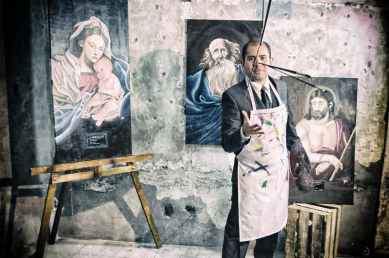
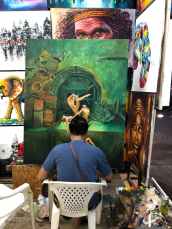
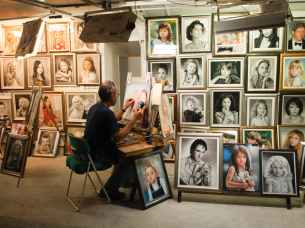
 If you look at some of the items that are popularly collected by hobbyists around the world, you will be surprised at how outrageous some of the items are. Toothpicks? Napkins? These things are given away for free at restaurants, why would anyone want to collect them? The truth is that some people are simply enthralled by the thought of collecting certain items. You surely realize by now that these items can be literally anything. However, one of the more traditional and widely acceptable hobbies is to collect art. Collectible art is very popular, and anyone can get into the hobby. All it takes is an appreciation for art, and the willingness to find additions to your new collection. Some people think that paintings are the only form of collectible art that is widely bought and sold. This is not the case at all. Collectible art can come in many different forms, from rugs to miniature wood carvings. Anything that is hand-crafted and beautiful in some way can be considered art, and is fair game for an art collection. If you are reading this, you probably have some specific form of art in mind. This is good and will give you a direction to start in, but you should always keep an open mind and look for other types of art that will expand your horizons and allow you to gain a wider variety of incredible items to add to your collection. As you view different art, you will probably start to notice particular artists who always stand out to you. This is a natural occurrence, and almost any art collector will eventually start to lean towards a certain artist who they appreciate above the rest. It could be one of the famous master artists, or even a local college kid trying to scrape by. Many art collectors will also gravitate towards certain themes or types of art. This is not a necessity by any means, but it will give your art collection a sense of unison. Some think of art collectors as people who have thousands of dollars to spend on paintings by famous artists. The truth is that you don’t need to invest any major amounts of money in order to get some beautiful, original art. The college student that I mentioned before exists in every town. You will never have a lack of “starving artists” to buy paintings from. Most of the best talent goes unappreciated, and by buying from amateur artists you could be buying an original work from the next famous painter. You can find paintings anywhere in the world. If you are taking a vacation to an exotic location, you can almost always find vendors selling paintings. In a place like India, you can buy paintings for just a few dollars. Usually they are very unique and different from anything you will see from western artists. So whenever you travel, be sure to take the opportunity to see if there are any local artists who you would like to support. It will diversify your collection, and make it more interesting in general. You may also have an interesting story behind each painting. Once you start to see more and more additions to your personal collectible art gallery, you will begin to realize what a rewarding and fun hobby art collecting is. Not only does it allow you to appreciate some of the beautiful creations of artists, it also gives you some great decorations for your home. So what are you waiting for? Art collectibles are widely available from many different sources, and if you are really passionate about the subject then you should get started today. Find out about some local artists, and attend galleries or art festivals where you can see literally hundreds of artistic items on sale. Every item you see has the potential to be the first addition to your collection.


Website Stores
 http://art-and-craft-hobbies.com/
http://art-and-craft-hobbies.com/shop/

group Art Studio of Lewis Baber , Post and Sell your ART.

https://www.etsy.com/shop/Magikaljourneys?ref=seller-platform-mcnav
Art Two Old Guys Folk Art

Share this:http://Gallery-Wall-Art.com

Monday, December 10, 2018

How To Start Your Own Gallery

 How To Start Your Own Gallery So you are an art collector at the moment, with several pieces of art in your collection, and have noticed just how profitable the world of art can be for individuals looking to get into it in terms of business rather than as a hobby. It may seem like a romantic notion to have your own art gallery and be able to influence the world of art in a small way, but that is often not the reality. Starting any business of your own is extremely difficult, but starting an art gallery can be one of the most difficult of business tasks. You not only have to have a measure of artistic talent, as such, but you have to have a great deal of business sense. However, there are several tips that can help you on your way if that is really what you want to do. 1. Never open your own art gallery if it is only for the money - If you are in the gallery business for the money then look elsewhere because most galleries only make enough to cover the bills for the first few years. Until your business is established, you have next to no chance of making enough money to call your business a success. You should open the gallery because you love art and not to make a profit. If you do make a profit then that is a bonus. 2. If you have no knowledge of art collecting then do your homework beforehand - If you know nothing about art collecting then running an art gallery is not for you, but if you are determined then you need to learn all of the ins and outs of art collecting before you can own a gallery. This will take you at least six months if not longer so be prepared to be in it for the long haul. 3. Tap into your passion for art - A passion for art is a must and is necessary if you really want to attract both artists and sponsors alike. It is also necessary when trying to advertise any events that you have in your calendar. Beware of letting your love of art get in the way of your business head. 4. Know exactly what it is that you plan to do - You should have an aim, a goal, before setting up any business. If you want to own an art gallery then you should have a target for sales and a target for your involvement in the community too. 5. Find out where the best location would be before renting premises - Of course, if you are planning to set up business in a village with 250 working class inhabitants then it is to be expected that business will not be booming. However, if you have a good location in the centre of a town with little competition and middle class demographics then you will do far better. Check out rents and your audience before you actually put a deposit down on your potential gallery. 6. Have a business background - You must have business skills in order to make your art gallery work. Without business acumen, the likelihood is that you will be one of the businesses that do not see two years, and there are way too many of those around at the moment! 7. Brush up on your people skills - You need people skills to be able to attract artists, sponsors and press attention and should be able to make all of those feel comfortable in your gallery. Attracting customers is also a big part of any business so make sure that you are well prepared! Photo by Sharon McCutcheon on Pexels.com There is so much more to opening a gallery than meets the eye. You have all of the mundane tasks like hanging promotional materials, publicizing events, making sure that artists want to trust you to sell their work, courting the press and any number of other tasks that get tiresome and boring after the first few weeks. If you are prepared to do that and dedicate yourself to the pursuit of the fine arts for the rest of your life then it may be for you. You must certainly be prepared to work hard. Just make sure that you are getting into art gallery owning for the right reasons instead of the romantic image that you have in your head. Website Stores http://art-and-craft-hobbies.com/ http://art-and-craft-hobbies.com/shop/ group Art Studio of Lewis Baber , Post and Sell your ART. https://www.etsy.com/shop/Magikaljourneys?ref=seller-platform-mcnavArt Two Old Guys Folk Art Share this: http://Gallery-Wall-Art.com

Sunday, December 9, 2018

How to Craft a Garden Scrapbook


Garden scrapbooks can present a natural feeling when the audience is reading your storybook. Flowers are one of the popular natural-based elements that many people cherish. You can store flowers in a scrapbook to craft a garden style creation. To start you will need a dried flower. Compress the flower placing it into your scrapbook pocket, such as the memorabilia. Next, glue, tape, etc, the flower so that it is sticking on the page securely. You may have seen flowers preserved in bibles. The process in scrapbooks is similar, only you want to stick the flowers so that it does not fall out.

How to craft flowers for scrap booking:
You can use corsages, bouquets, or the colored part of the flower to craft your garden scrapbook. The compressed and dried flowers should be in a straight line, added to your scrapbook page, and smoothly seated near your photographs.

Your dry flowers and compressed flowers should be laminated. Use Xyron, or any acid-free product to laminate your flowers.

During the fall is the best time to pluck materials to make up a garden scrapbook. As you make up your garden scrapbook consider title page, captions, journal, lettering, photos, plant species, headings and more.


If you are adding fall leaves to your scrapbook, you may want to visit a copy shop. You will need to place the leaves in a sealed container when transferring the leaves. The leaves with depreciate over time if you fail to follow instructions. You can add the leaves at your title page to start your garden scrapbook.

If you are making up a scrapbook to present your garden, snap a few pictures and make up a blueprint. The blueprint should include each detail of your garden. Following, you can add a journal to let your friends and family know how you invented your garden.

When to take photos:
Spring, summer, winter, and fall is the best time to take photos of your garden. Each season provides you a variety of colors, shades, texture, blooms, etc. Once you snap the shots add them to your garden scrapbook.

If you want to get created you can cut, paste, and add extras to your scrapbook, i.e. cut magazine clips based on your garden theme and add them to your scrapbook. Also, you can add tips beside your pictures to help your family and friend learn.

During the seasons, you want to document your gardens activities as well as your own to create a genealogy, and history of your scrapbook. Record detail specifics to help your audience learn from your efforts. During the summer record, the blooms so that when winter comes you can look back on your success. When the blooms start to grow, you may want to snap photos so that you can add to your scrapbook. Try crafting your scrapbook in a chronological order so that your book tells the story you want to portray to the audience.


Some people add special rocks to their scrapbook. If you decide to add, rocks try to find the small, flat rocks. The thicker, bulk rocks will only interrupt your scrapbook.

Flowers are beautiful inside scrapbooks. The flowers that set off garden scrapbooks include roses of all colors, daffodils, tulips, crocuses, and so on. Still, if you add flowers to your scrapbook you want to use petals that harmonize with your theme. For instance, if you are crafting a summer page, then use colorful flower copies. If you are crafting a fall theme, then use the flowers that flow in harmony with your theme.

Website Stores


Website Stores


Two Old Guys Folk Art
Share this:     http://Gallery-Wall-Art.com
Website Stores


How to Craft Chimes


How to Craft Chimes

Did you know that you could take old reddish-brown clay made of unglazed ceramics to make chimes? (Terra Cotta Pots)

The pots will make up a nice batch of chimes. To get started you will need up to ten ceramic pots. The diameter should be around 1 ¼ inch and up to 1 ¾ inches. You will need wood, 4 inches time’s six plates and varnish finish. You will need up to ten 5/8 inch grommet screws. Add up to ten rounds of beads made of wood and around 3/8 inches of spool, i.e. up to 30 pounds of anglers’ line. You will need wire up to 20 yardsticks, i.e. spools and a 7/8 inch grommet screw.

How to make chimes:
Now you are ready to make your chimes. On the wooden plates, add a coat of varnish, allow drying, and continuing a few times adding the varnish as needed. Use your grommet 5/8 screw, and screw it in by hand, screwing it into the plate. If you add, additional screws keep them an inch apart. Cut your line measuring lengthwise. Next, at each end feed the line through, and into the grommet screw. Work the line through until you reach the lower region of the vessel.

Once you finish the step, run another line measuring lengthwise through your beads of wood, and fasten so that it forms a dual bond. You can use adhesives to fasten the area if you feel the need to do so.

Take the other vessels you have available to create your chimes, threading them and regulate the measurement lengthwise as needed. You can now add the grommet 7/8 screws to hang your chimes. Fasten the screws at the middle of your crown plate. Use the wire outlined in this article to hang your chimes.

You are now finished with your chimes. To complete this article I will give you a few tips on crafting snakes to place beneath the lower areas of your door so that you can keep wind out during the cold months.

If you do not have a yard of fabric around your house, purchase a yard of strong textile weaves of fabric or corduroy. You will need thread that coordinates with your fabric. In addition, you will need stuffing, dry beans, and rice. Add some adhesives and felt, preferably red, white, and black.

Next, gather your fabric and trim up to 10 inches wide, and around 6-inches lengthwise. Measure your door before cutting, since you will need length wider than the bottom area of your door. Use two parts of the outer regions of your fabric, gather and hand or machine sew at least 3 sides and around 3/8 inches away from the edge of your fabric. You will need to leave a short region of your fabric available. On the right side of your fabric conceal your seams and add your filling, i.e. stuffing. Turn up your edges and then stitch them and choose additives to design your snake.

You can use glue, buttons, studs, etc to make your eyes if you choose to do so. As well, you can use your felt to make up the mouth, nose, and so on. Use the red felt to make the lips, tongue, etc, and the black to make up the surrounding features about the eyes, since as lids, or brows.

The snakes will make up a great warming gift also. You can craft a few to give to your friends, as well as keep a few around your home to keep it warm in the winter months.

[caption id="attachment_181" align="alignnone" width="647"]<img class="alignnone  wp-image-181" src="https://art922882269.files.wordpress.com/2018/12/pexels-photo-997411.jpeg" alt="photo of hats hanging on tree" width="647" height="971" /> Photo by Artem Bali on <a href="https://www.pexels.com/photo/photo-of-hats-hanging-on-tree-997411/" rel="nofollow">Pexels.com</a>[/caption]

Website Stores
Website Stores


Two Old Guys Folk Art
Share this:     http://Gallery-Wall-Art.com

Website Stores


Share this: http://Gallery-Wall-Art.com

Friday, December 7, 2018

How to Craft Basket Flowers

 flowers colorful plants bloom Photo by Pixabay on Pexels.com[/caption]

How to Craft Basket Flowers

We have walked through the steps of creating the May basket, now it is time to craft your flowers. We have added handles, basket, etc, to your quilt, which at this time you should have created six blocks to make your basket. How to create flowers: We are quilting flowers. On the left side of your fabric, you will have invented pink squares. You can trace your pattern to start your project. Trace at least one flower (Choice), use your outside solid lines, and repeat your steps to create the foliage, or leaves. Use the variety of green patterns and use the yellow narrow pieces to create the center of your flower. You can design roses if you like. Use a variety of greens, red, pink, white, etc, if you intend to create roses and petals. Along the lines, you have marked, cut the fabric strips sewn onto your fabric, the shaped patterns that form your design, cutting only near the lines. Use freezer paper and turn it over so that you reveal the side that does not have a shine. You want to create a starting line for the six centers of your flowers, and the flowers also. Once you mark the 12 parts, mark the leaves (12), marking them inside the dash lines. Now you are ready to cut your shapes. You will need an iron and board. Use your hot press, or iron to press the flowers on your paper, pressing in the middle of your flowers on the left side and in the middle. You want the glossy paper turned in the direction of your fabric flower at this point. Do the same with the center of the flowers and foliage. Next, collect your yellow filament/thread and tone it with the center of your flower. If the colors do not match, try another shade of yellow. Run lines of stitches into your cloth, which encloses the ring of the freezer paper. You want to congregate your material around this ring, so pull your filament up at the end. Now, tie your thread, press the ring, and use your starch bottle, spraying the region. Do the same for the center of your flowers. Next, use your variety of green filaments that match your leaves and collect the allowances at the seam. (1/4 inch) Collect around the foliage and streamlines of stitches along your fabric, about the enclosed region of your ring that is designed on the freezer paper. You want to collect your textile about the ring. Pull your filament/thread up at the finish and tie it, pressing the ring. Again, spray with starch. When you congregate your allowances at the flower seams, snip the inner points of the flower corolla/petals where the flower collectively forms a ring. You will need to collect your thread that matches the color of your petals, such as pink. Just as you collected the edges of your leaves, do the same for your corollas. Once you finish running stitch lines in your fabric, which you have enclosed freezer paper about the ring, you will need to gather your material about the ring. Next, pull your strands of thread up at the finish. Next, bind your filament and then press the ring. Press, and spray the region with fabric starch. Now seam your allowances, i.e. snip the central points of the leaves, flower center, etc where the flower collectively forms a ring. Press and starch to complete your crafting task:   [gallery ids="137,133" type="rectangular"] Now you are ready to assemble the top of your quilt. After you assemble, you can move to finish your craft. Website Stores http://art-and-craft-hobbies.com/ http://art-and-craft-hobbies.com/shop/ group Art Studio of Lewis Baber , Post and Sell your ART. https://www.etsy.com/shop/Magikaljourneys?ref=seller-platform-mcnavArt Two Old Guys Folk Art   Share this: http://Gallery-Wall-Art.com  

Thursday, December 6, 2018

Buying Paintings: Cubism


Buying Paintings: Cubism What started out as a rather avant-garde art movement has become one of the greatest examples of artistic forms breaking that mold of convention, revolutionizing European painting and sculpture up to the present century, and was first developed between 1908 and 1912 during a collaboration between Georges Braque and Pablo Picasso with influences from the works of Paul Cezanne and Tribal art. Though the movement itself was not long-lived, it began an immense creative explosion that has had long lasting repercussions, and focused on the underlying concept that the essence of an object can only be captured by showing it from multiple points of view simultaneously. The movement had run its’ course by the end of World War I, and influenced similar ideal qualities in the Precisionism, Futurism, and Expressionistic movements. In the paintings representative of Cubist artworks, objects are broken up and reassembled in an abstracted form, and the artist depicts the subject in a multitude of viewpoints instead of one particular perspective. Surfaces seemingly intersecting at random angles to produce no real sense of depth, with background and object interpenetrating with one another, and creating the shallow space characteristic of Cubism. French art critic Louis Vauxcelles first used the term cubism, and it was after viewing a piece of artwork produced by Braque, the term was in wide use though the creators kept from using the term for quite some time. The Cubist movement expanded from France during this time, and became such a popular movement so quickly that critics began referring to a Cubist school of artists influenced by Braque and Picasso, many of those artists to Cubism into different directions while the originators went through several distinct phases before 1920. As Braque and Picasso worked to further to advance their concepts along, they went through a few distinct phases in Cubism, and which culminated in both Analytic and Synthetic Cubism. With Analytic Cubism, a style was created that incorporated densely patterned near-monochrome surfaces of incomplete directional lines and modeled forms that play against each other, the first phases of which came before the full artistic swing of Cubism. Some art historians have also pegged a smaller “Hermetic” phase within this Analytical state, and in which the work produced is characterized by being monochromatic and hard to decipher. In the case with Synthetic Cubism, which began in 1912 as the second primary phase to Cubism, these works are composed of distinct superimposed parts. These parts, painted or pasted on the canvas, were characterized by brighter colors. Unlike the points of Analytical Cubism, which fragmented objects into composing parts, Synthetic Cubism attempted to bring many different objects to create new forms. This phase of Cubism also contributed to creating the collage and papier colle, Picasso used collage complete a piece of work, and later influenced Braque to first incorporate papier colle into his work. Similar to collage in practice, but very much a different style, papier colle consists of pasting materials to a canvas with the pasted shapes representing objects themselves. Braque had previously used lettering, but the works of the two artists began to take this idea to new extremes at this point. Letters that had previously hinted at objects became objects as well, newspaper scraps began the exercise, but from wood prints to advertisements were all elements incorporated later as well. Using mixed media and other combinations of techniques to create new works, and Picasso began utilizing pointillism and dot patterns to suggest planes and space. By the end of the movement, with help from Picasso and Braque, Cubism had influenced more than just visual art. The Russian composer Igor Stravinsky was inspired by Cubism in some examples of his music that reassembled pieces of rhythm from ragtime music with the melodies from his own country’s influence. In literature, Cubism influenced poets and their poetry with elements parallel with Analytical and Synthetic Cubism, and this poetry frequently overlaps other movements such asSurrealism and Dadaism.


Website Stores http://art-and-craft-hobbies.com/ http://art-and-craft-hobbies.com/shop/ group Art Studio of Lewis Baber , Post and Sell your ART. https://www.etsy.com/shop/Magikaljourneys?ref=seller-platform-mcnavArt Two Old Guys Folk Art   Share this: http://Gallery-Wall-Art.com     Website Stores  

Tuesday, December 4, 2018

Abstract Art As Therapy


Abstract Art As Therapy
Summary:
Abstract art is not just a mixture of colourful meaningless patterns and arbitrary shapes.
There is, I believe, a definate therapeutic value to be found in most of the enigmatic marks made by the very different styles available today. What appears to be the most important decision to make is a very careful consideration of the specific audience in conjunction with the choosing of the appropriate artwork. This is not something to be taken lightly or quickly. This can cover ...
Article Body:
Abstract art is not just a mixture of colourful meaningless patterns and arbitrary shapes.
There is, I believe, a definate therapeutic value to be found in most of the enigmatic marks made by the very different styles available today. What appears to be the most important decision to make is a very careful consideration of the specific audience in conjunction with the choosing of the appropriate artwork. This is not something to be taken lightly or quickly. This can cover anybody within the wide spectrum of individual audiences: a busy boardroom environment or a single office or room where quick thinking, fast reactions, and serious decision making is required; or a worker who returns from a hard days work simply wanting to be visually massaged by an easily observed enigma; or even the space inwhich the desperate and mostly misunderstood person who is gradually loosing their tentative hold on the sense of reality. There is a tremendous variety of possibilities.
Here are some suggested associations from one artists point of view:
Colour plays an obvious healing and therapeutic role to be found in a carefully selected crafted piece, and so colour-field work, which is growing in popularity, first conceived by artists like Mark Rothko and Ellsworth Kelly with their vast areas of empty colour space, might add a general feeling of peace and quiet to an otherwise noisy and hectic environment. With there being very few variations within such a large image a gentle sense of immersion into abstract stillness can slow down any fretful or irratic thinking, and even assist with the adrenal challenge of a creative.
Indefinate shapes or patterns by the likes of Jackson Pollock, Peter Lanyon, and Howard Hodgkin (again, similar works inspired by these very different abstract styles can be seen in many exhibitions, shops and galleries), show a very positive association, and may perhaps persuade a mind filled with illogical thoughts to pause, simply take in the apparent spontenaiety, and then take a different direction. Hodgkin style works in particular can be seen as puzzle like canvases inwhich the observer has no real point of reference so is free to "start" anywhere upon the picture. And because there are very few defined areas sometimes the observer inevitably finds themself either regarding the piece with little emotion, and therefore can freely make a comment - positive or not.
Let us not deny, however, the fact that many an image that has the potential to provoke a negative response can also be of great value to the observer who might actually benefit from seeing such a challenging picture that bears such a bad association. Better there on the wall than here inside the head. In this case the classic associations of red for blood and danger, black for death and sin, brown for decay and illness, along with dramatic lines and movements found in a painting are equally valuable stimulii if revealed within the appropriate environment. This comes back to my point made at the beginning - when choosing a picture, very careful consideration must be taken in order to find that one work of art which speaks directly to the very deepest parts of the observer.
Website Stores

http://art-and-craft-hobbies.com/

http://art-and-craft-hobbies.com/shop/

group Art Studio of Lewis Baber , Post and Sell your ART.
https://www.etsy.com/shop/Magikaljourneys?ref=seller-platform-mcnavArt
Two Old Guys Folk Art
Share this: http://Gallery-Wall-Art.com
http://Gallery-Wall-Art.com

Friday, November 30, 2018

Learn to draw and paint


Everybody at some point in their life wanted to learn to draw and paint. Just by watching children, you could see that these skills are one of those that entice them during their early years. However, not all people decide to take this goal seriously, especially when adulthood comes around. Nevertheless, if you do want to develop this innate skill, it is still possible. Here are the basics that you have to know.
Drawing Versus Painting
One important factor that people do not understand is that drawing is different from painting. Thus, if you want to learn how to draw and paint, this means you have to develop two different skills. Drawing is generally defined as depicting a subject by the use of lines. On the other hand, painting is the art of coating surfaces with paint for artistic or utilitarian purposes.
Thus, the medium you’d be using would be the main difference along with the process itself. Nevertheless, these two disciplines are still related and most often combined to make an art work. Most of the time, drawing becomes a prerequisite of painting; although this is not always the case.
Drawing Basics
For you to start having drawing skills, you should constantly practice your hands and eyes. Do this by sketching. Constantly sketching is the best way for you to learn how to draw more artistically and professionally.
Remember that drawing is developed by constant practice of your hands. This is not improved by merely reading or acquiring whatever book based knowledge that is available. Thus, practice your hand to draw. Be very observant with your surroundings. Try to sketch things or people during your idle time. Doing this is really one worthwhile hobby that could pay off in the future.
Copying is your stepping stone in drawing. Get a model and copy it. It is all right to make mistakes. This is exactly what erasers are for any way. Also, do away with the notion that you need to have professional materials for your work to look good. A simple sketch book and basic drawing pencil and eraser would do.
Painting Basics
On the contrary, painting would entail appropriate materials so that your work would end up nicely done. You would need a couple of brushes that come in different sizes. You also need acrylic paint of various colors, but most importantly, you should have the primary colors, a bigger tube of white and black. However, if you do not want to buy a black tube, you could simply create your own. Do this by combining all the primary colors.
It is best to start with Acrylic paints because these are the easiest to work with. Thus, the general painting developmental stages would be mastering acrylics first before aiming to learn oils or water color. Also, this kind of paint is easily mixed with water. All you’ll need would be a glass or a bucket in which you would put the water in for cleaning purposes. You also use this water to keep your paint moist, it dries up quickly. A pallet is needed too. If you don’t have one, you can improvise by using paper plate that has Aluminum foil covering.
To start painting, you have to draw on your canvas first. Draw your subject and other details of the pictures’ environment. After this, add on the color using your paint. Keep on practicing by choosing different subjects. Also, try to experiment with the colors you’ve got.
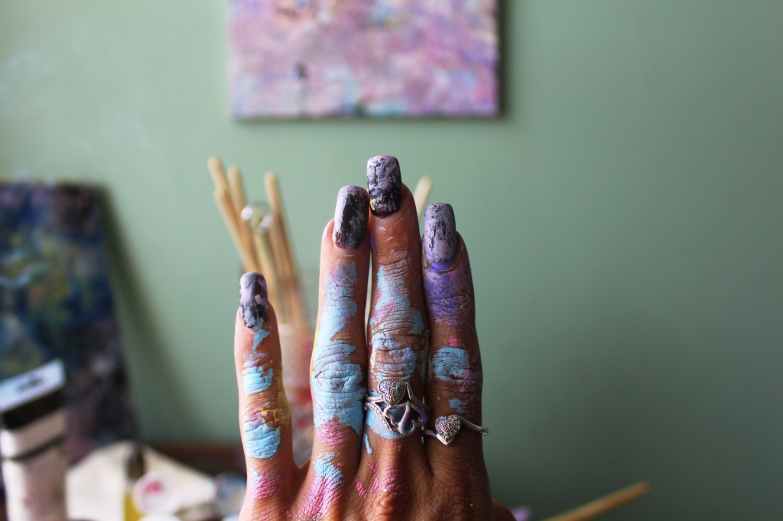
[caption id="attachment_100" align="alignnone" width="549"]person holding brown and gray paint brush Photo by Yigithan Bal on Pexels.com[/caption]
Make full use of your pallet and create various shades of colors. Continue on sketching and painting like this and for sure your skill would start to develop in no time.
Blog: of art and craft-hobbies
Website Stores
1
http://art-and-craft-hobbies.com/
2
http://art-and-craft-hobbies.com/shop/
[caption id="attachment_91" align="alignnone" width="548"]ball ball shaped blur color Photo by Pixabay on Pexels.com[/caption]
group Art Studio of Lewis Baber , Post and Sell your ART.

https://www.etsy.com/shop/Magikaljourneys?ref=seller-platform-mcnavArt 
Two Old Guys Folk Art
Share this:
LOOGOSSS
http://Gallery-Wall-Art.com

Buying Paintings: Symbolism

Buying Paintings: Symbolism
Evoking a taste similar to the Romanticist tradition, but utilized mysticism and sensitivity through mythology and dream imagery, preceding the psychoanalytical work of Freud and Jung. With a strong philosophical touch, more so than a style of art, and Art Nouveau and Expressionist artists such as Edvard Munch. Beginning in France as a reaction to the movements of Naturalism and Realism, which seemed to capture the particular components of consensual reality, and presented spirituality and imagination reflecting some artists budding interest in religion and spirituality.
In literature, poet Charles Baudelaire was developing his work and the movement, and especially with such luminaries as Verlaine contributing to the collective effort of the literary movement during the 1860s and through to the 1870s. With the works of Edgar Allen Poe coming to popularity in the 1880s, the Symbolism movement in artwork represented an outgrowth into the darker and more gothic nature of Romanticism, and contrasted with Romanticism’s rebellious and impetuous sides. Symbolist writers wrote in very metaphoric and suggestive manner, to imbue the subjects with a sense of symbolic meaning, and made realistic images into representatives for more esoteric and primordial ideas.
In translating the language of dreams into artwork with symbolic leanings, discovering a visual style that draws upon that philosophical approach that captures a sense of art that has been influential on more than one movement artistically, and has evoked some of the more fantastic imagery to ever cross a canvas. The Symbolist Manifesto was published in 1886, leading to a description of the movement that included ideas such as being hostile towards plain and matter-of-fact meanings, and to express the ideal in a perceptible form was the sole purpose of this art form.
Symbolists that preferred poetic means of conveying their ideas, were known for their techniques of removing technical aspects to achieve a greater fluidity for their work, and became related with seeking use of symbolic images over raw description to evoke the state of the poet’s soul. Paul Verlaine was influential in an 1884 publication defining the essence of Symbolism, through many essays on the relevant poets of the day, and came to the conclusion of relating the works of this movement to the famed philosopher Arthur Schopenhauer, whose own work delved into art as a means of refuge from the strife of the world.
These similarities, which presented a contemplative and artistic refuge using themes such as mortality and otherworldliness, created disparaging arguments between critic and artist alike. Leading to many Symbolist poets of the day to make their own publications and periodicals, and the literary Symbolism then reached its’ peak in the year 1886, with one particular periodical lasting until 1965. Though the two aspects of the movement were distinct, they would occasionally overlap each other, and became a continuation for mystical tendencies in a Romantic tradition, even flirting with the self-consciously dark Decadence movement.
There were several dissimilar groups of painters and visual artists within the Symbolism movement, and the artistic movement seemed to have a greater impact worldwide than the literary movement, reaching multiple artists and sculptors from such distinct parts as Russia. Many of the symbols found herein are not necessarily universal, but more personally affected with the artist’s obscure and private references, with some dreamlike subject matter influencing later Surrealists. Symbolism has had a strong link to music for a while, and mostly due to the enthusiasm for the work of Richard Wagner, whose own music reflected his influence from the philosopher Schopenhauer.
Symbolism even grew to affect some of the literary fiction contributed by Oscar Wilde and Paul Adam, and has a pronounced ring when speaking about movements that have literarily and artistically that have crossed over into other inner groupings of artistic work. The waters of Symbolism have even filtered down the centuries into the state of motion pictures today, and early on held influence with Russian playwright Anton Chekhov, as well as Russian actor and director Vsevolov Meyerhold’s method of acting that influenced early motion pictures.
It is difficult to overlook Symbolism’s influence and repercussions throughout the timeline to the current period of the world, as it drifts through many aspects taken for granted on a daily basis, and many pieces of work for many artists from writer T. S. Eliot to painter Pablo Picasso and even the state of horror films as well. A decidedly different state of the world now has interpreted and reinterpreted all this throughout these hundreds of years, and created more and more material reflections of the state of things as they happen to be.
Website Stores
1
2
Two Old Guys Folk Art
Share this:      
LOOGOSSS